


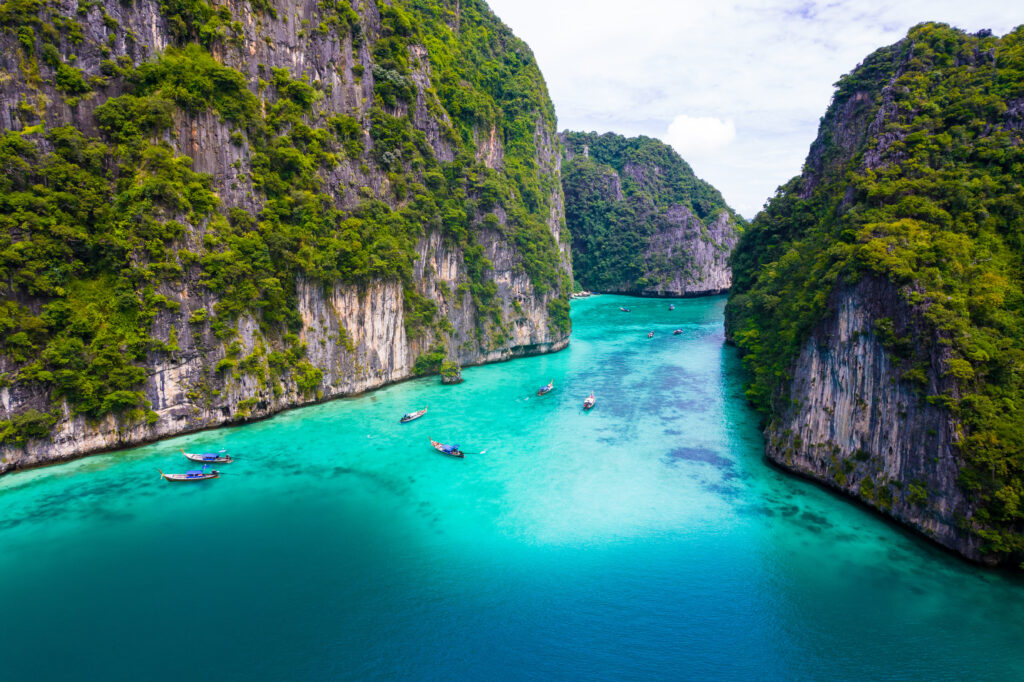
Pileh Lagoon water often appears bright turquoise or emerald green in photographs, especially when sunlight reaches the narrow inlet between the limestone cliffs. The color is produced by the way sunlight reflects through the water, the depth of the lagoon, the pale seabed, suspended particles and the surrounding rock. Weather, tide and camera settings can also contribute to make the same area look different from one visit to another.
Pileh Lagoon is located on Phi Phi Leh in the Andaman Sea and is commonly included in a Phi Phi Island tour from Phuket. Its enclosed shape and high cliffs create a recognizable landscape, but visitors should remember that the lagoon is a natural environment rather than a permanently controlled swimming pool.
Table of Contents
How Light Changes Pileh Lagoon Water
Sunlight contains many colors. When it enters seawater, some wavelengths are absorbed more quickly than others. Blue and blue-green light can travel farther through clear water, which is one reason tropical seas often appear blue or turquoise. In a shallow area, light can also reflect from the seabed and return to the surface.
The exact color of Pileh Lagoon water changes with the angle of the sun. Around brighter parts of the day, direct light can make shallow sections look vivid. When clouds cover the sun or the cliffs cast a shadow, the water may appear deeper green, blue-gray or darker. This is normal and does not automatically mean that the water is dirty.
Limestone, Sand and Water Depth
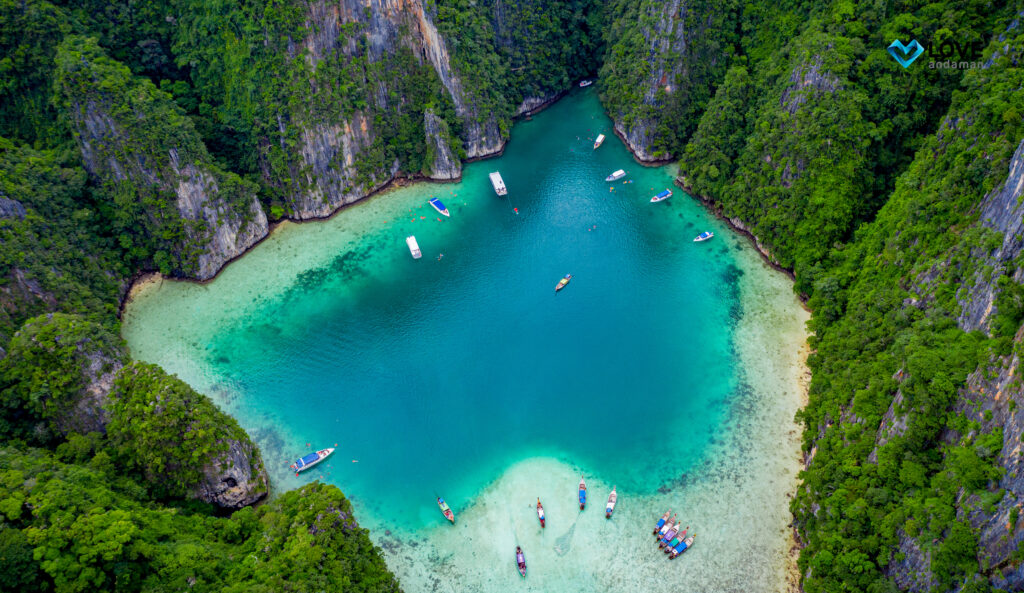
Pileh Lagoon is surrounded by limestone cliffs. Pale rock fragments and a light-colored seabed can reflect sunlight upward through the water. Shallow areas therefore tend to look brighter than deeper channels. The contrast between green vegetation, gray limestone and blue-green water also makes the lagoon’s color seem more intense.
Fine natural particles, plankton and small amounts of organic material can alter how light is scattered. Too many particles reduce clarity, but a small amount can contribute to a green tone. Rain, currents and boat movement may temporarily change visibility. For this reason, no operator can guarantee the same color or clarity every day.
When Does the Lagoon Look Best?
There is no single guaranteed hour, because tide, cloud cover and visitor traffic vary. Clearer skies and stronger sunlight often produce brighter colors, while calmer water can create smoother reflections. The tide affects water depth and the amount of space available for boats, so guides may adjust the timing of a visit.
Travelers can see Pileh on a Phi Phi and Bamboo Island tour or a Phi Phi and Maiton sunset tour, depending on the current program. During a Phi Phi island snorkeling trip, protect the environment by using reef-conscious sun protection, keeping plastic secured and following instructions about swimming zones.
Photographing Pileh Lagoon Responsibly
For natural-looking photographs, avoid applying extreme saturation that changes the real color of the lagoon. A wider composition can show the limestone walls and explain why the water looks enclosed. Keep phones and cameras secured with a strap, and never stand in an unsafe part of the boat for a photograph.
The color of Pileh Lagoon water is beautiful because several natural conditions work together. It may appear turquoise, green or blue on different days, and each version is part of the real Andaman Sea. Follow Love Andaman on Facebook, Instagram and Lemon8.
Frequently Asked Questions
Why is Pileh Lagoon water emerald green?
Pileh Lagoon water gets its turquoise and emerald-green appearance from sunlight, water depth, the pale seabed, limestone cliffs and natural particles in the water.
Blue and blue-green light can travel farther through clear seawater. When sunlight reflects from the light-colored seabed, the lagoon appears brighter and more vivid.
Does Pileh Lagoon water look the same every day?
No. Pileh Lagoon water may appear turquoise, emerald green, deep blue or blue-gray at different times.
The visible color changes with sunlight, clouds, cliff shadows, tide, water depth, currents and natural particles.
When does Pileh Lagoon water look best?
There is no guaranteed best time. Clear skies and stronger sunlight often make the lagoon appear brighter, while calm water can create smoother reflections.
Clouds, tide, cliff shadows and boat traffic may change throughout the day.
How do limestone cliffs affect Pileh Lagoon water?
The pale limestone and light-colored seabed reflect sunlight through the water. This can make shallow areas appear brighter than deeper sections.
The contrast between gray limestone, green vegetation and blue-green water also makes the lagoon’s color look more intense.
Does darker water mean Pileh Lagoon is dirty?
Not necessarily. The lagoon may look darker when clouds block sunlight, the cliffs cast shadows or the water is deeper.
Rain, currents and boat movement may temporarily affect visibility, but darker water does not automatically mean pollution.
Which tours visit Pileh Lagoon?
Travelers may visit Pileh Lagoon on a Phi Phi and Bamboo Island tour or a Phi Phi and Maiton sunset tour, depending on the current program.
The route may change according to weather, tide, marine park rules and safety conditions.
Can visitors swim in Pileh Lagoon?
Swimming may be available when weather, tide and local regulations allow it.
Visitors should remain in designated swimming areas and follow instructions from guides and marine park officers.
How can visitors photograph Pileh Lagoon safely?
Use a wide composition to include both the water and limestone cliffs. Secure your phone or camera with a strap.
Do not lean outside the boat, climb or stand in an unsafe position for a photograph.