


Fun facts
Why Does the Andaman Sea Change Color?
Andaman Sea color can shift from deep blue to turquoise, emerald green or even gray within the same day. The water itself is not being dyed. What we see depends on how sunlight enters the sea, which wavelengths are absorbed or scattered, and what lies in or beneath the water.
Understanding Andaman Sea color also explains why travel photographs do not always match the view on arrival. Water depth, pale sand, cloud cover, plankton, waves and suspended sediment all influence the final color seen by the eye or camera.

Table of Contents
Sunlight and water depth
Sunlight contains many colors. Water absorbs longer red wavelengths more quickly, while blue light can travel farther and scatter back toward our eyes. This is why deep, clear water often appears blue. As depth changes, the path of light changes too, creating different shades.
Shallow water over bright sand can look turquoise because light reflects from the seabed and travels through a shorter layer of water. Deep channels beside a beach may appear dark blue even when the water is equally clean.
Sand, coral and the seabed
White or pale sand reflects more light than dark rock, mud or seagrass. A sandy lagoon therefore looks brighter than a nearby deep reef. Coral structures, limestone and patches of vegetation create visible bands and shapes when viewed from a boat or viewpoint.
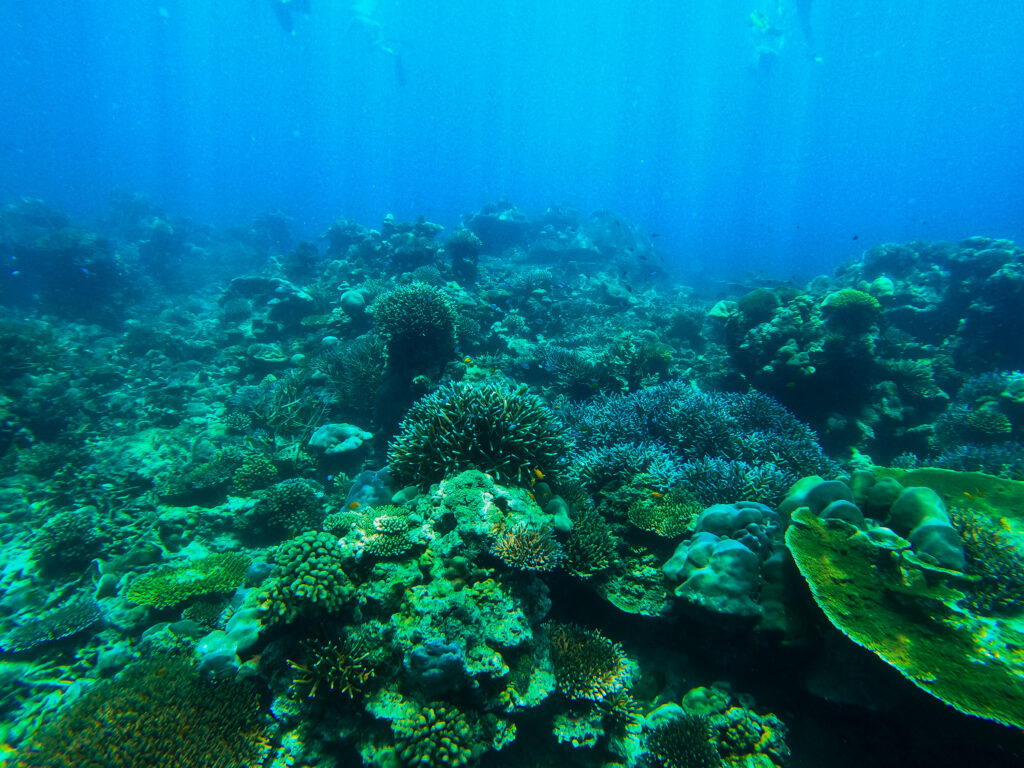
The apparent color does not tell you the exact health of coral. Coral can be brown, green, cream, blue or many other natural shades because of pigments and symbiotic algae. Water color and coral color are related to different processes.
Plankton, sediment and waves
Microscopic plankton can add green tones because many contain chlorophyll. Suspended sand or fine sediment can make water look milky, pale green or brown. After rain, runoff near land may carry particles into the sea, while waves can lift seabed material into the water column.
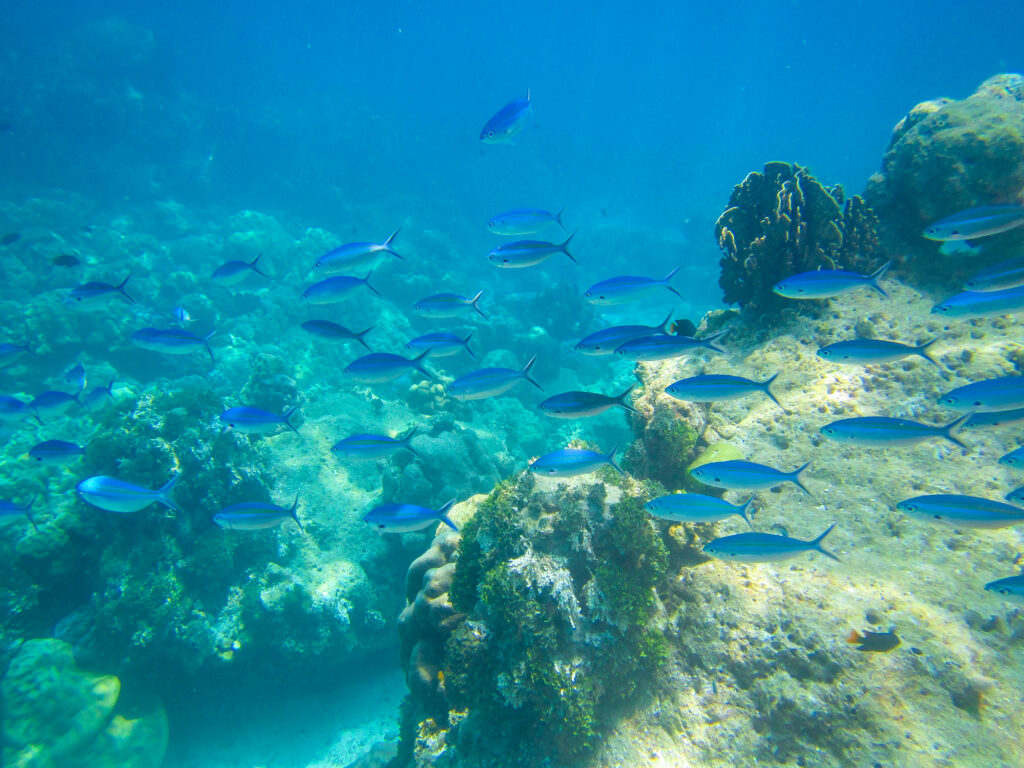
This is why snorkeling visibility may change even when there is no pollution. A windy day, strong tide or recent rain can reduce clarity temporarily. Conversely, calm conditions allow particles to settle and may reveal clearer blue water.
Clouds, cameras and choosing a tour
Cloud cover reduces direct sunlight and can make the sea look gray or darker. A low sun creates reflections, while midday light often reveals shallow turquoise areas more strongly. Camera settings, filters and editing can further change the result.
Choose an island tour for its whole environment rather than one promised shade. Phi Phi lagoons, Maiton reefs, Similan beaches and Phang Nga Bay each display different colors under different conditions. Natural variation is part of the Andaman Sea experience. Follow Love Andaman on Facebook, Instagram และ Lemon8
Frequently Asked Questions
Why is the Andaman Sea blue?
Water absorbs red light faster than blue light. Blue wavelengths travel farther and are scattered back toward the viewer.
Why does shallow water look turquoise?
Light reflects from pale sand or limestone beneath a short depth of clear water, producing a brighter blue-green appearance.
Does green water mean it is dirty?
Not necessarily. Green tones may come from plankton, depth, seabed color or lighting. Water quality requires proper testing, not a visual guess.
Why is the sea brown after rain?
Rainfall and waves can introduce or resuspend fine sediment, especially near river mouths, beaches and mangroves.
Why do photos look bluer than real life?
Camera white balance, polarization, filters, editing and the angle of light can intensify blue or turquoise colors.
Does clear water always have healthy coral?
No. Water clarity is only one factor. Reef health depends on temperature, pollution, physical damage, disease and many ecological conditions.
When is snorkeling visibility best?
It varies by site and day. Calm waves, limited runoff and suitable currents often improve visibility, but no operator can guarantee it.