


Fun facts
Bay vs Lagoon: What Is the Difference?
Bay vs lagoon may sound like a simple naming question, but the two coastal features are shaped and connected to the sea in different ways. A bay is a broad indentation of the coastline where the sea extends into land. Meanwhile, a lagoon is a shallow body of water partly separated from the open sea by sand, reef, rock or another barrier.
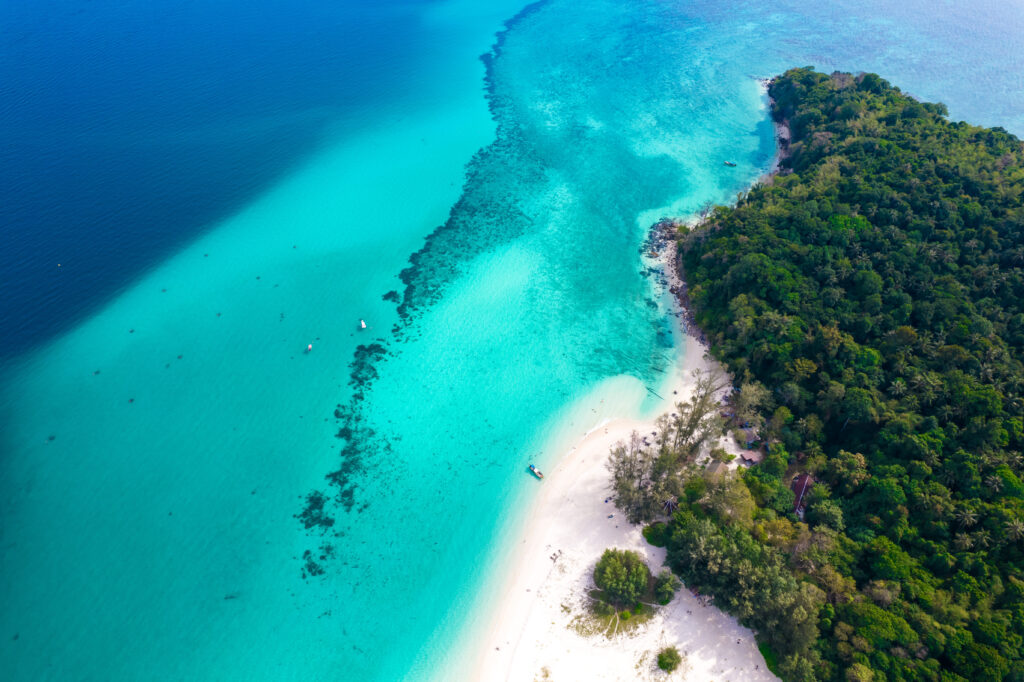
In the Andaman Sea, the bay vs lagoon difference becomes easier to understand through real destinations. Maya Bay opens toward the sea between limestone headlands. Pileh Lagoon is a narrow enclosed water body inside steep cliffs. The hidden hongs of Phang Nga Bay are chamber-like lagoons reached through caves or narrow openings.
Table of Contents
What makes a bay?
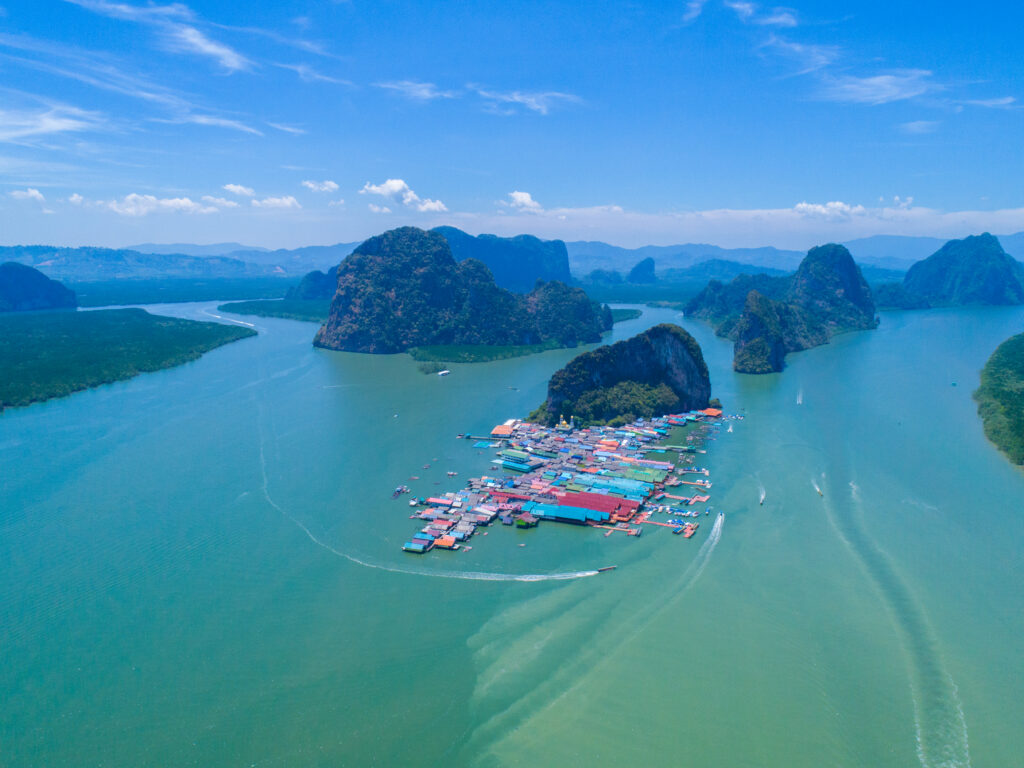
A bay is usually open to the sea along one side and surrounded by land on the others. Its size and shape can vary greatly. Bays may form through erosion, river processes, glacial activity, tectonic movement or the flooding of low coastal land. They can contain beaches, reefs, ports or deep channels.
Maya Bay is framed by limestone cliffs but has a clear marine opening. Whilst Phang Nga Bay is much larger and contains many islands, mangroves and channels. The word “bay” therefore covers both a small scenic inlet and a broad regional body of water.
What makes a lagoon?
A lagoon is generally shallower and more sheltered because a barrier separates part of it from the open sea. Coastal lagoons may sit behind sandbars or reefs. In limestone landscapes, a lagoon may be enclosed by rock and connected through a narrow channel or cave.
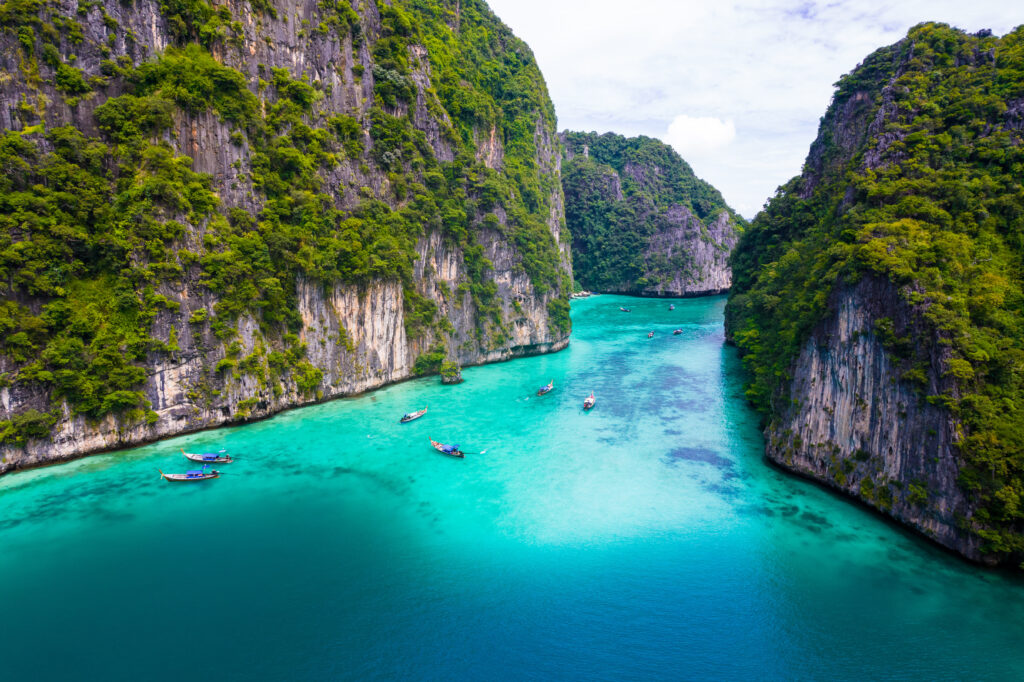
Pileh Lagoon is protected by high cliffs and reached through a narrow entrance. It feels calm and enclosed compared with the open sea, although its water level and movement still respond to tides. A hong lagoon may be even more hidden, with access controlled by the height of a cave opening.
How the difference changes your visit
Bays can receive more waves and boat movement because they have a wider opening. Beaches may be exposed to changing swell, and water color can vary with depth and sand. Lagoons often feel sheltered, but narrow entrances can create strong flow or become inaccessible at particular tides.
The name alone does not guarantee calm water or safe swimming. Weather, current, depth, boat traffic and local rules remain important. A guide may allow sightseeing only, move the boat to another area or adjust the order of activities.
Andaman examples to explore
A Phi Phi and Bamboo Island tour can show the contrast between Maya Bay, Pileh Lagoon and open-island beaches. A James Bond Island tour may include sea caves and hongs in the limestone landscape of Phang Nga Bay.
Learning the geography adds meaning to the trip: a bay is not simply a large lagoon, and a lagoon is not just a small bay. Each feature reflects its own connection to the sea, shelter and geological history.
Frequently Asked Questions
What is the main difference between a bay and a lagoon?
A bay is an indentation of the coast open to the sea, while a lagoon is shallow and partly separated from the open sea by a barrier.
Is Maya Bay a lagoon?
No. Maya Bay is a bay with a beach and an opening toward the sea between limestone headlands.
Is Pileh Lagoon completely closed?
No. It is highly enclosed by cliffs but has a narrow marine entrance and remains connected to tides.
What is a hong lagoon?
It is a hidden chamber-like lagoon inside limestone terrain, often reached through a cave or narrow opening.
Are lagoons always calm?
Not always. Narrow entrances, tides, wind and boat traffic can still create current or movement.
Can a bay contain lagoons?
Yes. A large bay can include islands, reefs, caves and smaller lagoon systems within its wider area.
Which tour shows both types?
A Phi Phi route can show Maya Bay and Pileh Lagoon, while Phang Nga Bay tours provide examples of large bays and hidden hongs.