


Fun facts
What Makes a Hong Lagoon Special?
A Hong lagoon is a hidden or enclosed body of water inside a limestone island or karst landscape. The Thai word “hong” means room, which describes the feeling of entering a natural chamber surrounded by high rock walls, mangroves and an opening to the sky.
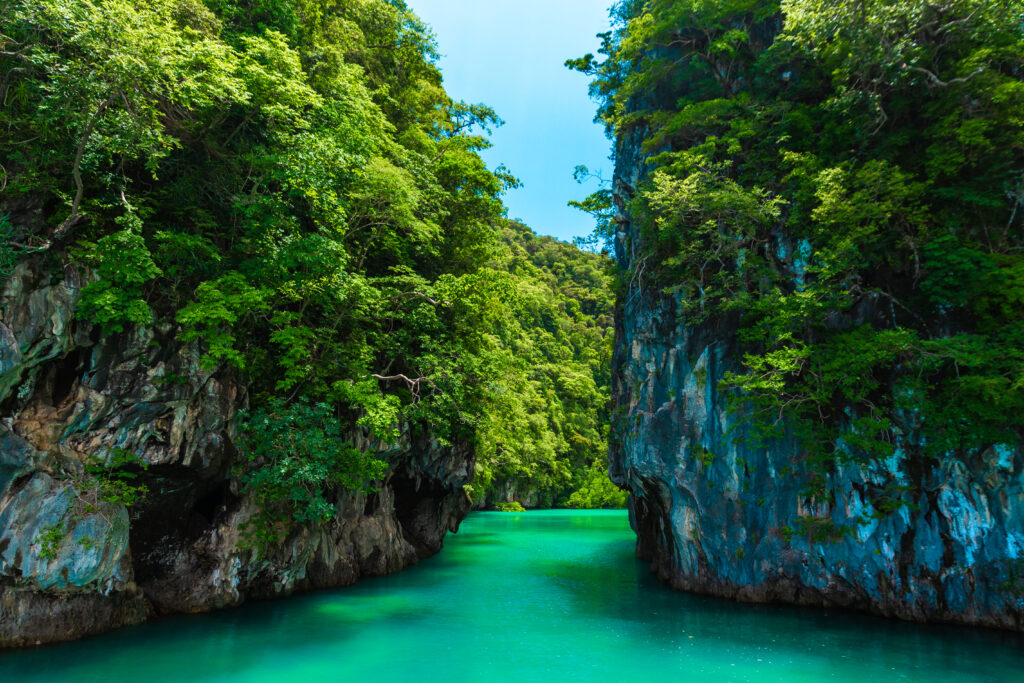
What makes a Hong lagoon special is not only its appearance but also the journey into it. Some hongs are reached through a low sea cave by canoe, while others have a wider entrance. Tide, light and weather can make the same place look and feel different on every visit.
Table of Contents
How a hong forms
Water slowly dissolves cracks in limestone and creates cave systems. Over time, parts of the cave roof may collapse, opening an inner chamber to sunlight. Seawater enters through a tunnel or gap, and sediment or mangrove plants may develop around the edges.
This geological history explains why hong walls can be steep and why the lagoon may feel completely separated from the outer bay. The landscape is still changing through weathering, erosion and plant growth.
Why tides control access
A cave entrance has a fixed rock ceiling, but the water beneath it rises and falls. At high tide, there may be too little headroom to pass safely. At very low tide, the channel may become too shallow or muddy for a canoe. The best access window depends on the specific cave.
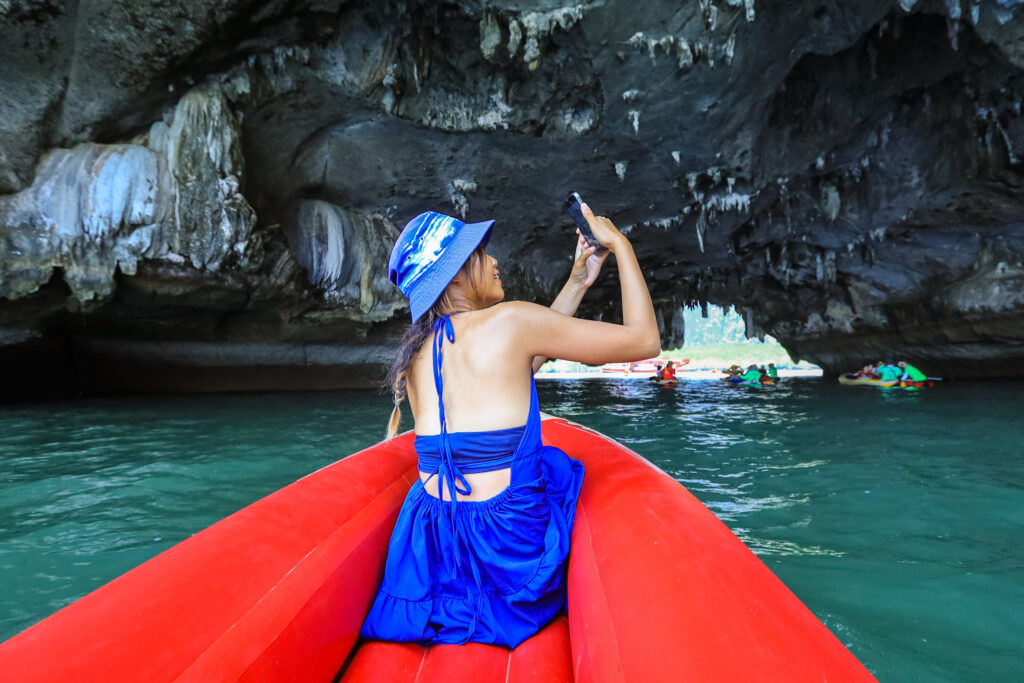
Local guides read the tide and observe the actual flow rather than relying only on a timetable. They may visit a hong earlier, choose another entrance or skip it if the conditions are unsuitable.
What you may see inside
Inside a hong, visitors may see limestone textures, mangrove roots, small crabs, mudskippers, birds or other wildlife. Sightings vary and should be observed quietly. The enclosed walls can also amplify sound, making calm behavior part of the experience.
Light entering from above can turn the water green or turquoise, while cloud cover creates darker tones. The lagoon may appear shallow at one edge and deeper near the channel. It is a natural habitat, not a swimming pool or film set.
How to visit responsibly
A Phang Nga Bay and James Bond Island tour may include canoeing at a suitable cave or hong. Remain seated when instructed, keep hands away from the walls and mangroves, and do not feed or handle animals.
Because access depends on tide and safety, no particular Hong lagoon visit should be guaranteed. A flexible route led by an experienced guide protects visitors and reduces pressure on crowded or sensitive locations.
Frequently Asked Questions
What does “hong” mean?
Hong means “room” in Thai. It describes a chamber-like lagoon enclosed by limestone walls.
Is a Hong lagoon the same as Hong Island?
Not always. “Hong” describes the hidden chamber feature, while several different islands and locations use Hong in their names.
How do you enter a Hong lagoon?
Some are entered by canoe through a sea cave or narrow channel. Others have wider natural openings.
Why can access change during the day?
The tide changes the space below cave ceilings and the depth of the channel.
Can I swim inside a hong?
Only if the specific location, conditions and local rules allow it. Many canoe hongs are for sightseeing rather than swimming.
What wildlife lives there?
Possible wildlife includes mangrove animals, birds, crabs and small fish, but sightings vary by location and tide.