


The environmental story behind Thailand’s most famous cove
Table of Contents
Maya Bay: A Beauty That Needed a Break
Maya By, located on Phi Phi Leh Island in the Andaman Sea, rose to international fame after The Beach (2000) movie. With its emerald waters and dramatic limestone cliffs, it soon became one of the most iconic beach destinations in Thailand. But what many didn’t see behind the postcard-perfect images was the heavy environmental toll — which led to Maya Bay being closed for restoration in 2018.
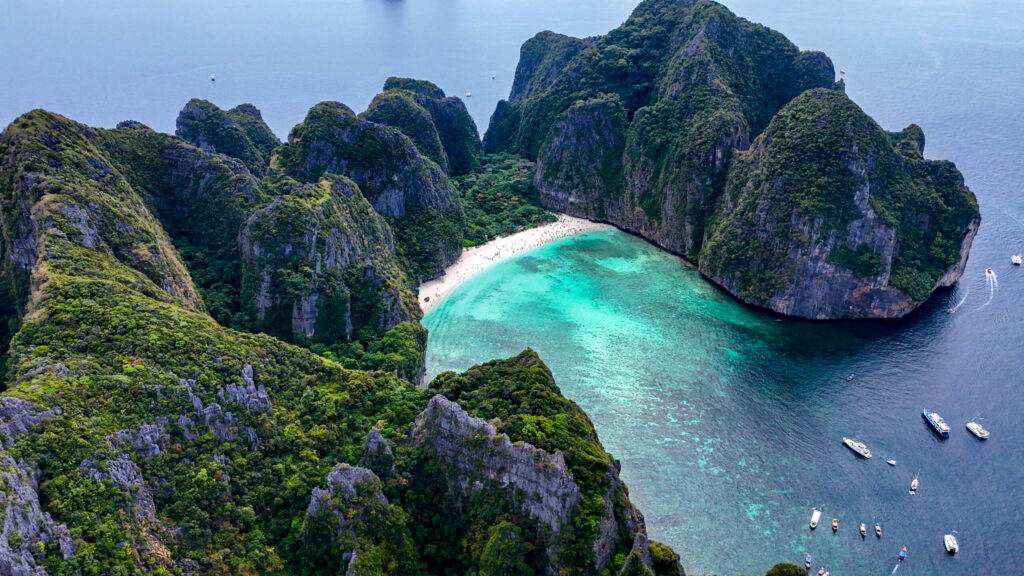
What Really Happened: The Cost of Overtourism
Before its closure, Maya Bay received up to 6,000 visitors per day, along with hundreds of speedboats docking directly at the shore. This led to:
- Destruction of over 80% of coral reefs
- Severe damage to seagrass beds and sandy seabeds
- Noise pollution and overcrowding that drove away marine life
- Reef bleaching caused by chemical sunscreen and trash
- Decline of species like blacktip reef sharks and sea turtles
In short, Maya Bay was loved too much — and nature couldn’t keep up.
The Closure in 2018: A Radical Yet Necessary Move
In June 2018, Thailand’s Department of National Parks announced the closure of Maya Bay to allow the ecosystem to heal. Conservation efforts included:
- Coral restoration and artificial reef programs
- Banning boats from entering the front of the bay
- Monitoring marine species and water quality
- Restricting all tourist activities within the beach zone
The results? A slow but visible recovery. Coral began to regrow, and blacktip reef sharks returned for the first time in years.
Reopening with a New Model: Tourism with Limits
Maya Bay officially reopened in 2022 — but under strict regulations designed to protect its fragile ecosystem:
- Visitors are limited to 375 people per time slot
- Open only from 10:00 AM to 4:00 PM daily
- Swimming in the bay is now prohibited
- All boats must dock at the back pier with no beach landings
These changes are part of a new approach to eco friendly island tours that balance tourism and sustainability in Thailand’s marine parks.
A Living Lesson in Sustainable Tourism
The story of Maya Bay serves as a reminder: Nature can recover if given the chance. But it also highlights the need for responsible travel. Coral reefs, manta rays, parrotfish, and even the shy green sea turtle all depend on healthy ecosystems.
So when you join any phi phi island tour from Phuket, you’re not just sightseeing — you’re stepping into a living ecosystem that deserves respect.
🚤 Travel Better: Join Responsible Island Tours
Looking for Maya Bay alternatives or eco-conscious trips in the Andaman Sea?
Check out these thoughtfully designed experiences:
🌴 Phi Phi + Bamboo Island Tour
🐬 Phi Phi + Maiton Sunset Trip
🕵️ James Bond Island Tour Phuket
And don’t forget to follow our ocean conservation journey here:
📸 Instagram
📘 Facebook