


Fun facts, local life
Ganesh Chaturthi: The First Grand Celebration in Old Town Phuket – A History of Faith and Culture
Table of Contents
The Origin of Ganesh Chaturthi in India
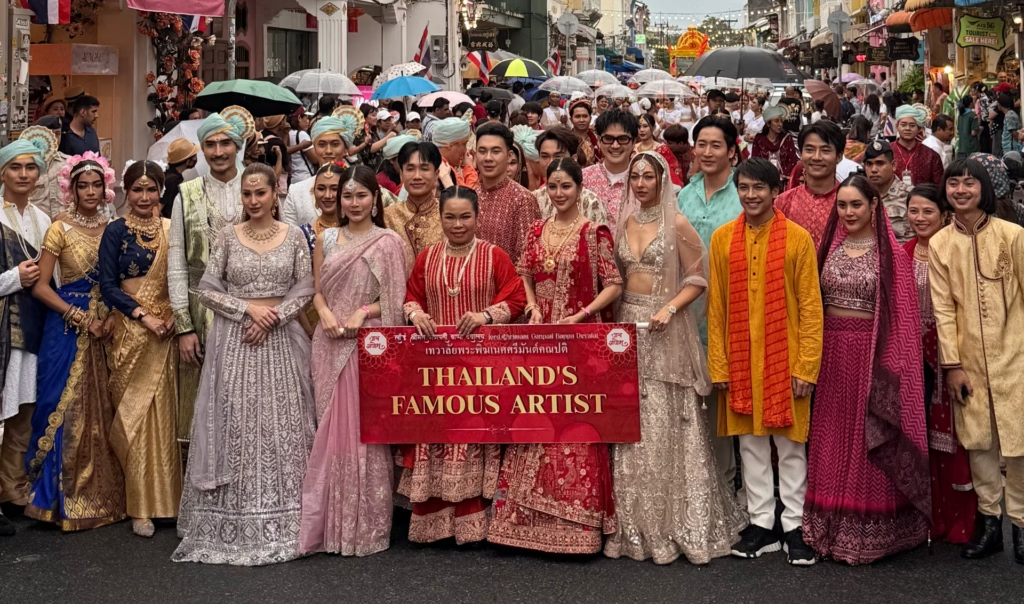
Ganesh Chaturthi falls on the fourth day of the waxing moon (Chaturthi) in the Bhadrapada month, usually in August or September. It marks the birth of Lord Ganesha, the son of Lord Shiva and Goddess Parvati. This sacred festival has been celebrated for centuries to honor Lord Ganesha, the god of wisdom, prosperity, and remover of obstacles.
Lord Ganesha is revered as:
- Vighnaharta (The Remover of Obstacles)
- The God of Wisdom and Knowledge
- The Bestower of Success and Prosperity
The festival symbolizes new beginnings. Devotees invite Lord Ganesha into their homes or public spaces to seek blessings for success in work, studies, or life.
The Legend of Lord Ganesha’s Birth
According to Hindu mythology, Lord Ganesha was created by Goddess Parvati (wife of Lord Shiva) from clay to guard the door while Lord Shiva went into meditation. When Lord Shiva returned and found that Lord Ganesha would not let him in, he became enraged and severed Ganesha’s head. Upon realizing his mistake, Parvati requested that Ganesha be revived, and Shiva agreed, replacing his head with an elephant’s head. Lord Ganesha was then brought back to life, assuming his new role as the god of wisdom and remover of obstacles.
The Beginning of Ganesh Chaturthi Celebrations
While the worship of Lord Ganesha has ancient roots, the grand celebration of Ganesh Chaturthi began during the Chalukya Dynasty in the 16th to 17th centuries. During this time, the festival was celebrated with great importance in villages and communities across India.
The Revival of the Festival During Colonial Times
In the 19th century, Bal Gangadhar Tilak, a prominent revolutionary leader, played a key role in reviving Ganesh Chaturthi on a large scale. He saw the festival as a tool to unite the Indian people and inspire a sense of patriotism and resistance against British colonial rule. Tilak believed that the festival could bring the people of India together, creating a platform for community building and solidarity. As a result, Ganesh Chaturthi became both a religious and a cultural event.
Key Rituals of Ganesh Chaturthi
- Invocation of Lord Ganesha: Devotees consecrate Lord Ganesha with prayers and rituals.
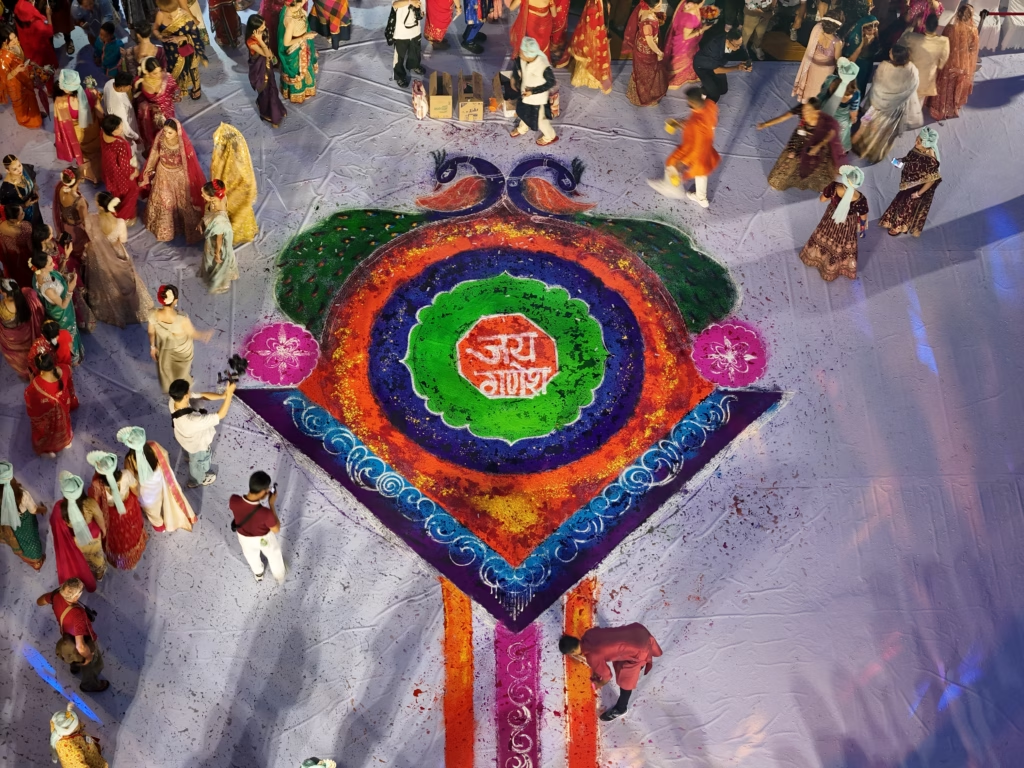
- Offering of Rangoli and Modaks: These symbolize abundance and prosperity.
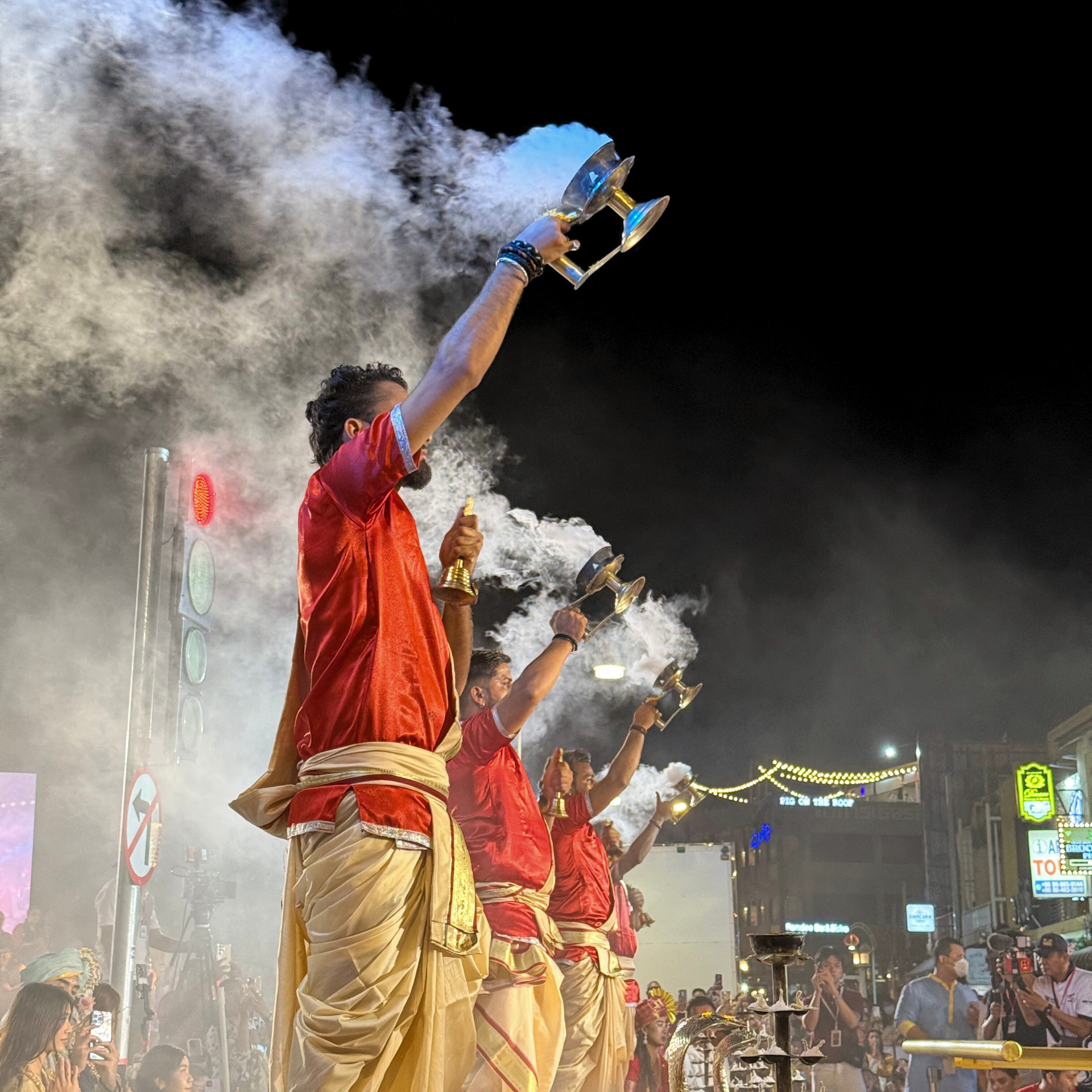
- Aarti Ceremony: Lighting lamps and singing hymns purify the mind and lead to wisdom.
- Immersion Ritual: On the final day, devotees take the idol of Lord Ganesha in a grand procession and immerse it in water, symbolizing impermanence.
Lord Ganesha’s worship dates back to ancient times. The grand festival became widespread during the Chalukya Dynasty and peaked under Chhatrapati Shivaji Maharaj in the 17th century, symbolizing community unity. In the 19th century, Bal Gangadhar Tilak revived the festival in Mumbai as a symbol of unity against British rule.
The Spread of Ganesh Chaturthi to Southeast Asia
Trade and migration brought the worship of Lord Ganesha to Southeast Asia, especially among Tamil Muslims and Marathi Hindus. The festival reached Thailand, particularly in coastal cities with strong ties to India.
In Thailand, both Thai Buddhists and Thai-Indians honor Lord Ganesha as the god of wisdom and new beginnings. The Ganesh Chaturthi festival in Phuket blends ancient traditions with modern celebrations.
Ganesh Chaturthi: The First Grand Celebration in Phuket
This year marks the first official Ganesh Chaturthi celebration in Old Town Phuket. The event showcases the faith of Phuket’s Indian and Hindu communities while offering a cultural platform for both locals and international visitors.
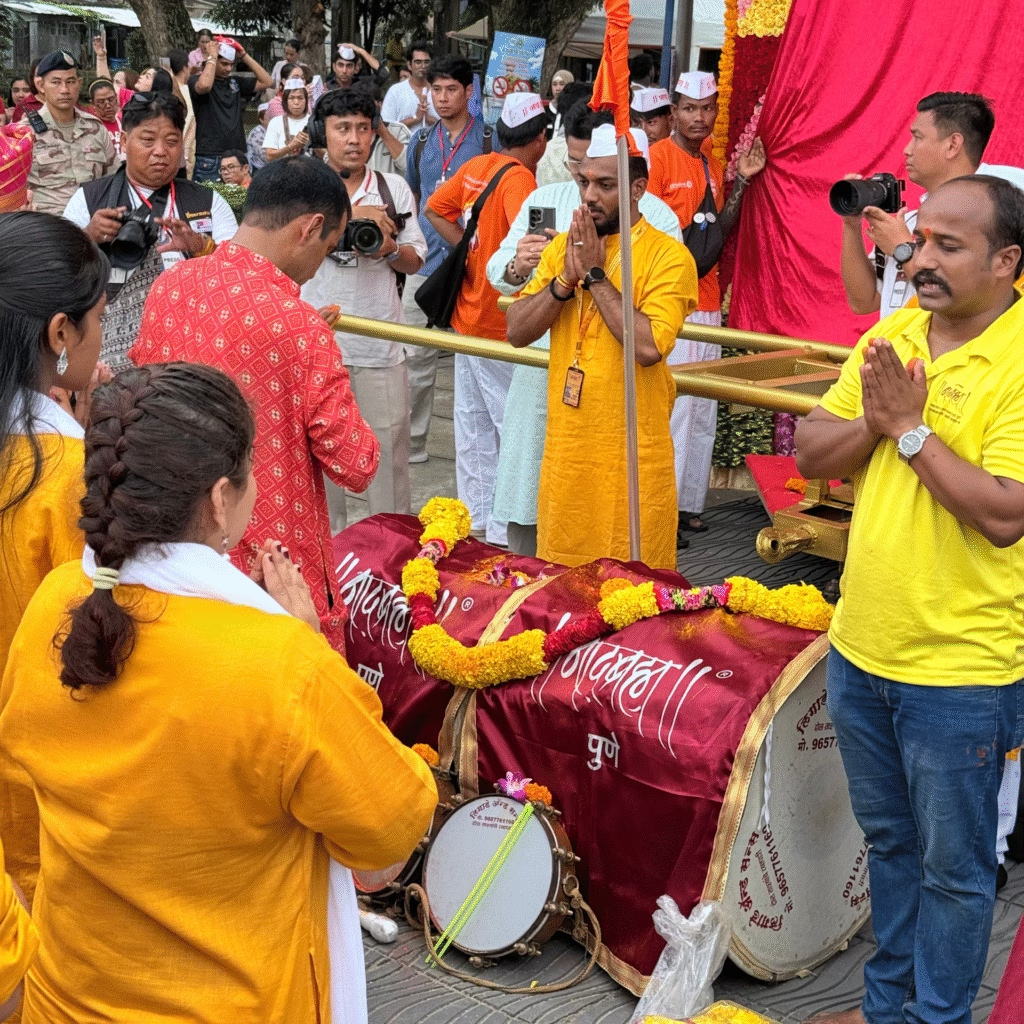
- The Grand Procession with Lord Ganesha in the Dukkdu Sthiti form: The procession became a vibrant sight, accompanied by prayers and Indian music.
- Rangoli Art: Intricate sand and colored powder designs were made as part of the ritual, showing traditional Indian art.
- The Grand Aarti Ceremony at Charter Intersection: Hundreds of participants joined in devotion, creating a powerful atmosphere.
The Procession of Lord Ganesha in Dukkdu Sthiti
A highlight of Ganesh Chaturthi in Phuket was the procession of Lord Ganesha in the Dukkdu Sthiti form, a powerful display of faith and devotion. This procession invoked Lord Ganesha for prosperity and success.
Lord Ganesha in Dukkdu Sthiti Form
In the Dukkdu Sthiti form, Lord Ganesha is seated on an elephant or tree trunk, symbolizing prosperity. He holds a pot of treasures or a golden sack, signifying abundance and the removal of financial obstacles. This form represents blessings for success in work and business.
The Grand Procession
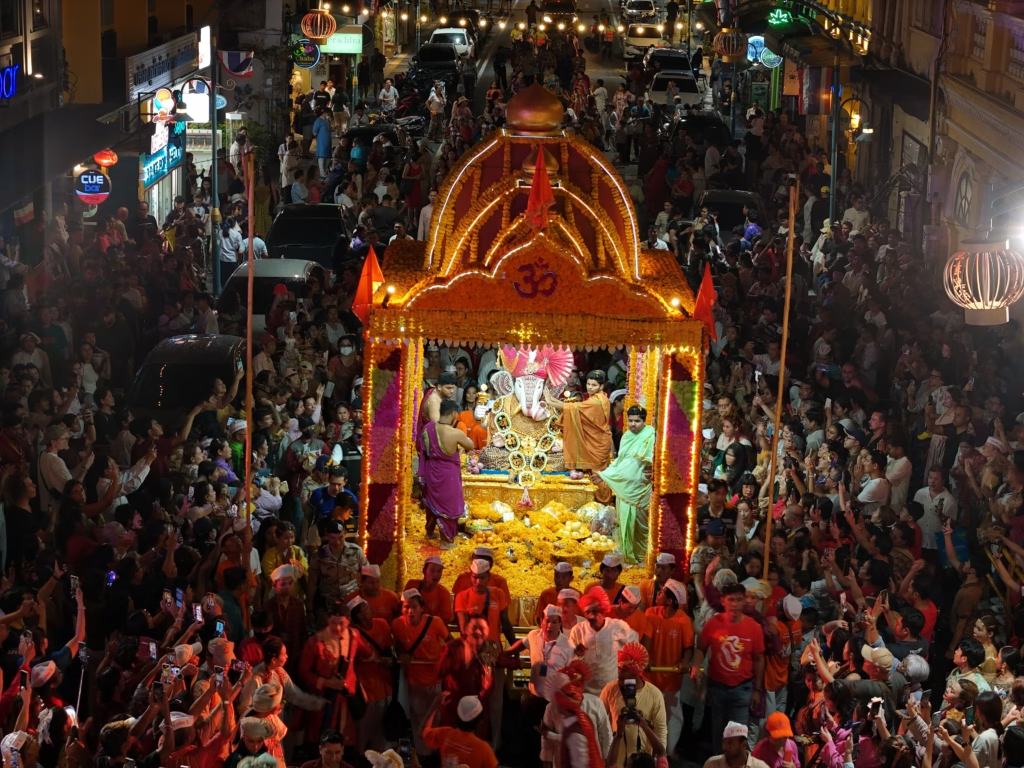
The procession began at Ganesha Temple and moved through Old Phuket Town. Lord Ganesha in the Dukkdu Sthiti form was placed on a decorated float with vibrant flowers and flags in gold and red. The float featured traditional Indian fabrics.
Devotees marched with prayers and Indian music. The procession became the center of a gathering of people from all over Phuket, both locals and tourists, who joined the celebration.
Making an Impression
The procession of Lord Ganesha in the Dukkdu Sthiti form was not just a religious act. It showcased Indian culture in all its intricate detail, bringing Hindu beliefs to those unfamiliar with the festival.
The atmosphere, filled with chants and music, allowed participants to feel the power of faith that flowed through the procession. The event enhanced Phuket’s image as a cultural destination, attracting visitors during this significant time of year.
Significance of the Event for Phuket
The first-ever Ganesh Chaturthi celebration in Phuket highlighted the island’s role as a multicultural city that brings together diverse beliefs and practices.
This event added another charm to Phuket’s tourism offerings. It created a cultural space that connected people of different ethnicities, reflecting the beauty of peaceful coexistence.
Contact Love Andaman
Want to experience a journey filled with the vibrant culture and stunning beauty of the Andaman Sea? Love Andaman is here to help you create unforgettable memories with our top-notch services.
🌐 Website: wp.loveandaman.com
📘 Facebook: Love Andaman
📷 Instagram: @loveandaman
🍋 Lemon8: Love Andaman Travel