


Fun facts, island, life style
The Geography and Geology of Koh Tapu — Why Does It Look Like This?
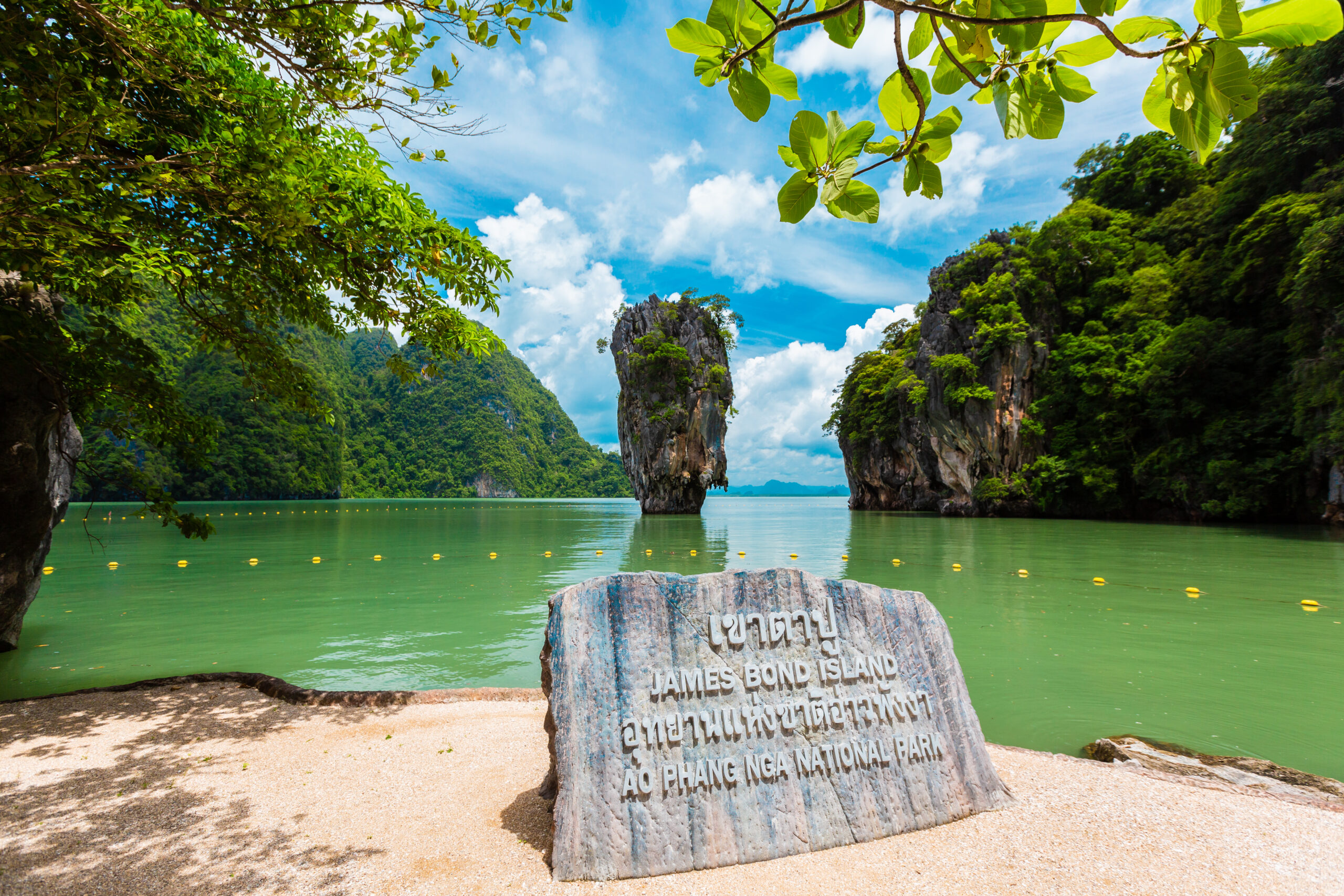
At first glance, Koh Tapu appears to be a strange limestone pillar rising dramatically from the sea in Phang Nga Bay. Its narrow base and wider top look almost impossible, yet this unique shape is the result of natural geological processes that have taken place over millions of years.
Table of Contents
How Koh Tapu Was Formed
Koh Tapu is composed mainly of limestone, a type of sedimentary rock formed from the accumulation of marine organisms such as coral, shells, and microorganisms around 250–300 million years ago, when the area that is now Phang Nga Bay was completely underwater.
Later, movements of the Earth’s crust caused these limestone layers to uplift above sea level, creating isolated limestone formations that eventually became the islands we see today.
Erosion and the “Nail-Shaped” Rock Formation
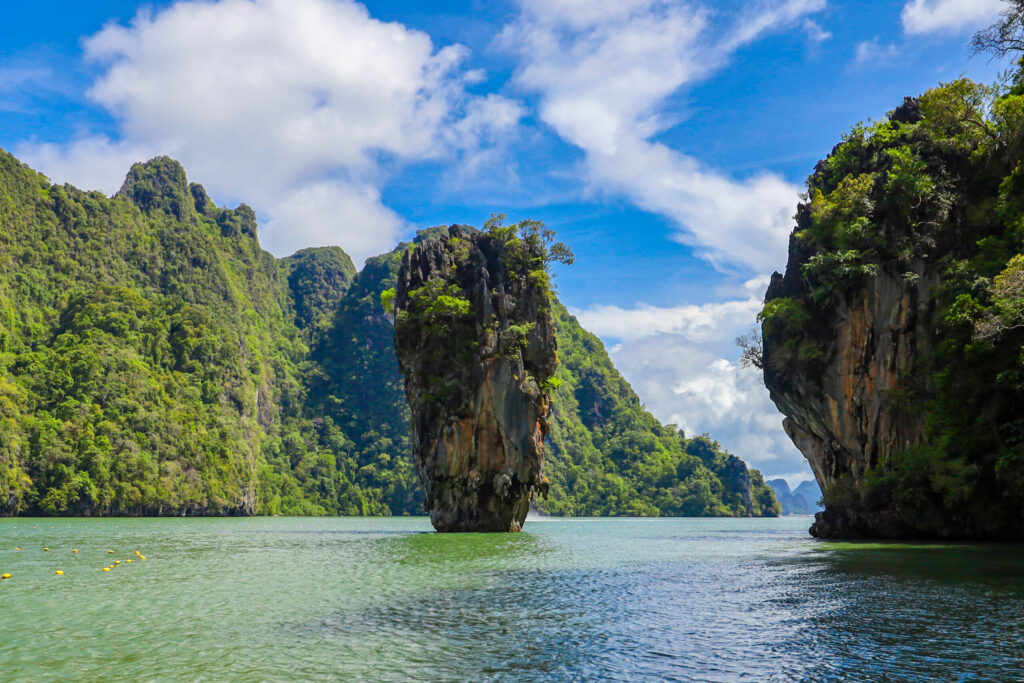
The most striking feature of Koh Tapu is its narrow base supporting a much wider upper section. This unusual form was shaped by several natural processes:
- Marine erosion, as waves and tidal currents continuously strike the base of the rock
- Chemical weathering, where limestone slowly dissolves when exposed to seawater and mildly acidic rain
- Natural fractures within the rock, causing some areas to erode faster than others
Over time, the lower section eroded more rapidly than the upper portion, creating the iconic shape that resembles a nail driven into the sea—hence the name Koh Tapu (“Tapu” means nail in Thai).
Why Koh Tapu Has Not Collapsed
Despite its fragile appearance, Koh Tapu remains standing today because:
- The upper limestone layers are denser and structurally stronger
- The internal rock formation is still relatively stable, with no major fractures
- The area is protected, limiting human impact such as climbing or physical contact with the rock
Geologists note, however, that Koh Tapu continues to change naturally—just at an extremely slow pace over geological time.
A Geological Treasure of Phang Nga Bay
Koh Tapu is not an isolated phenomenon but part of a larger karst landscape, a rare geological formation characterized by steep limestone cliffs, sea caves, and uniquely shaped islands. This makes Phang Nga Bay one of the most geologically significant coastal regions in the world.
Eco-Friendly tour with us Love Andaman 💙
Similan Day trip
Surin Islands Day trip
Phi Phi Island + Bamboo