


Fun facts
🏝️ Types of Sand in the Andaman Sea (Biogenic vs Abiogenic)
When you join a phi phi island tour from Phuket, you’re not just walking on a beach—you’re stepping on millions of years of natural processes. The types of sand found in the Andaman Sea can actually be divided into two main categories: biogenic sand and abiogenic sand.
Understanding these types of sand helps you see why each island—whether it’s Phi Phi, Maiton, or Bamboo—feels completely different.
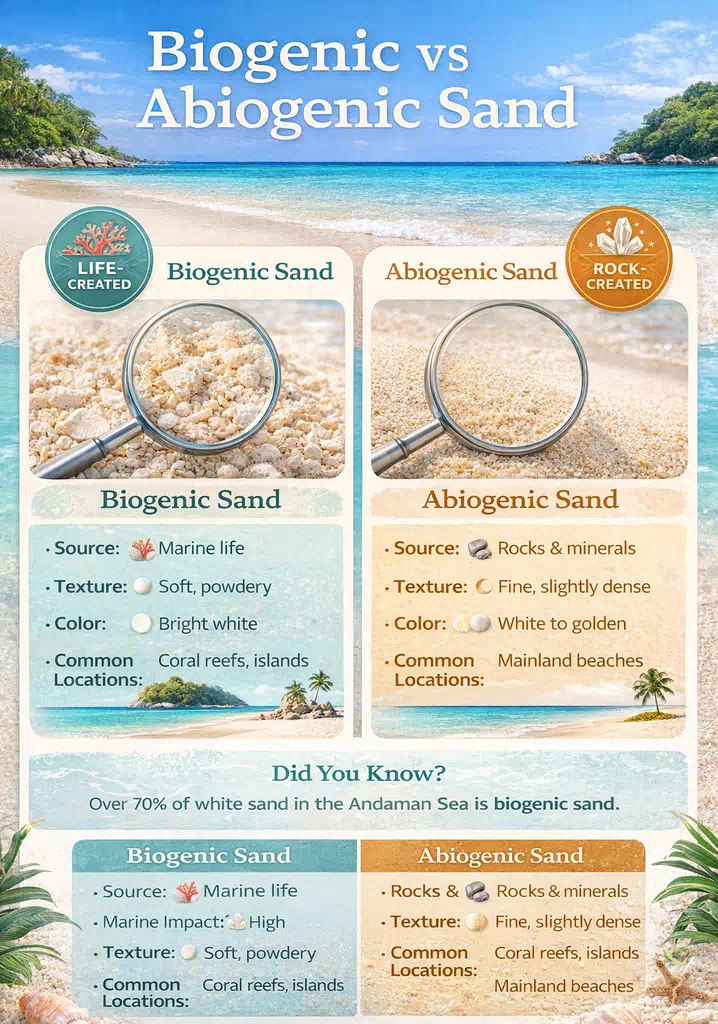
Table of Contents
🐠 1. Biogenic Sand (Life-Created Sand)
Biogenic sand is formed from living organisms. This is the most dominant sand type in the Andaman Sea.
Sources include:
- Coral fragments
- Shells
- Marine organisms
- 🐟 Parrotfish (major sand producers!)
💡 Fun fact: A single parrotfish can produce hundreds of kilograms of sand per year.
Where you’ll see it:
- Phi Phi Islands tour
- Bamboo Island
- Similan Islands
Why it matters:
- Creates that soft white powder sand
- Supports marine ecosystems (food chain & food web)
- Closely linked with coral reef health
👉 Perfect for:
- phi phi island snorkeling trip
- bamboo island snorkeling
Explore: https://wp.loveandaman.com/phi-phi-islands-bamboo-island
🏖️ 2. Abiogenic Sand (Rock & Mineral Sand)
Abiogenic sand comes from non-living sources like rocks and minerals.
Main composition:
- Quartz (silica sand)
- Weathered rock particles
Characteristics:
- Smooth and fine texture
- Slightly more golden or off-white
- Durable and stable
Where to find it:
- Phuket beaches
- Maiton Island
Why it matters:
- Enhances water clarity
- Ideal for relaxing beach walks
- Creates stunning lagoon reflections
👉 Perfect for:
- maiton island day trip
- private tour maiton island
Explore: https://wp.loveandaman.com/phi-phi-maiton-sunset
🌊 Biogenic vs Abiogenic Sand: What’s the Difference?
| Feature | Biogenic Sand | Abiogenic Sand |
|---|---|---|
| Source | Marine life | Rocks & minerals |
| Texture | Soft, powdery | Fine, slightly dense |
| Color | Bright white | White to golden |
| Found in | Coral reefs, islands | Mainland beaches |
| Marine life impact | High | Moderate |
💡 In the Andaman Sea, biogenic sand dominates island destinations, which is why places like Phi Phi look more “tropical paradise” compared to other regions.
🐢 Why Sand Matters for Marine Life
The types of sand directly influence marine biodiversity:
- Biogenic sand → coral reefs, eel, lionfish habitats
- Fine sand → resting areas for stingray & manta ray
- Shell fragments → support the marine food chain
This forms a complex food web that keeps the Andaman ecosystem alive.
🚤 Best Tours to Experience These Sand Types
🌴 Phi Phi + Bamboo Island
- Rich biogenic sand
- Clear snorkeling reefs
👉 https://wp.loveandaman.com/phi-phi-islands-bamboo-island
🐬 Maiton Island Tour
- Mix of abiogenic + biogenic sand
- Dolphin spotting
👉 https://wp.loveandaman.com/phi-phi-maiton-sunset
🌊 Similan Islands
- Ultra-fine white sand beaches
- World-class snorkeling
👉 https://wp.loveandaman.com/similan-islands
🌱 Eco-Friendly Travel Tip
Every grain of sand plays a role in the ecosystem.
When joining thailand snorkeling tours:
- Avoid stepping on coral
- Don’t take sand or shells
- Use reef-safe sunscreen
👉 This protects the best Andaman Sea tours Thailand for the future 💙
✨ Final Thoughts
By understanding the difference between biogenic and abiogenic types of sand, your trip becomes more than just a beach day—it becomes a deeper connection with nature.
Whether you’re on a one day trip to phi phi island or exploring hidden lagoons, the sand beneath your feet tells a story shaped by both life and geology.